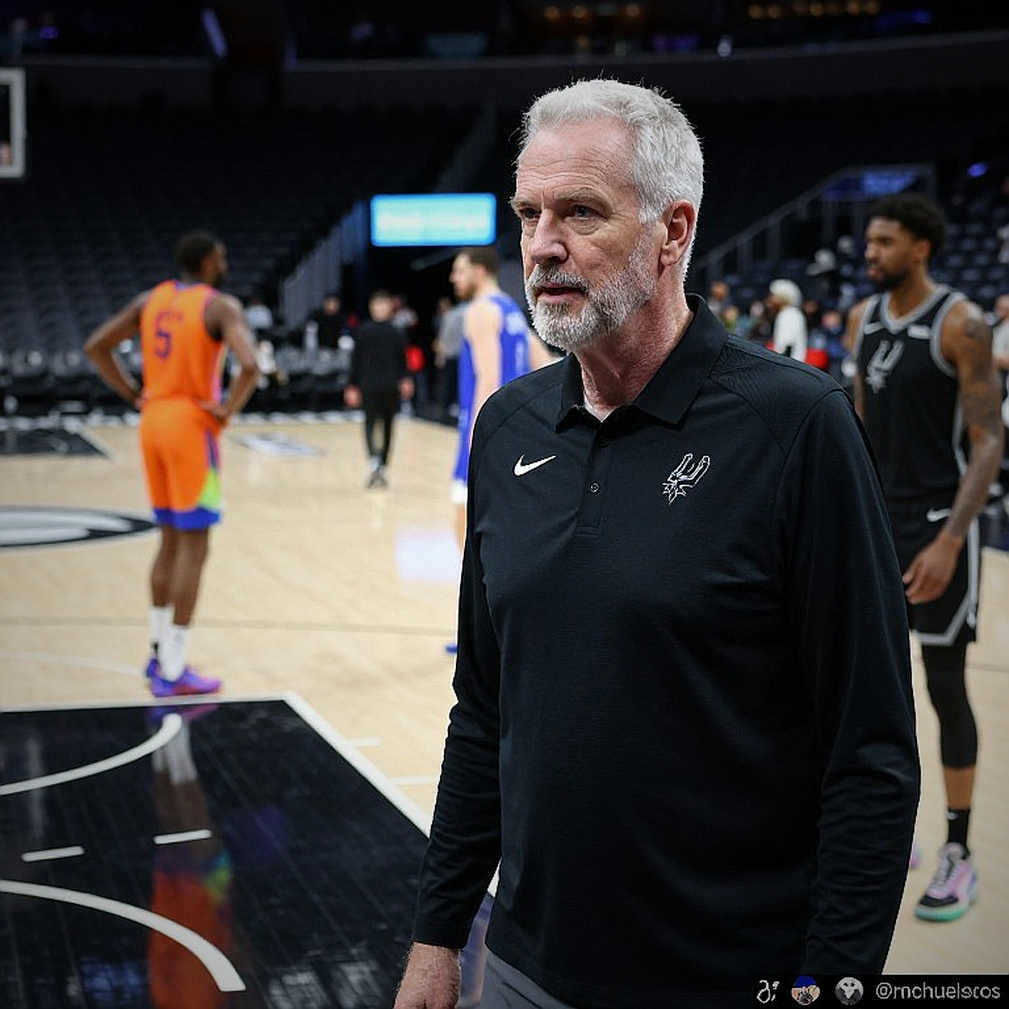
Vitaly Fridzon retires at 40: The age curve of a Russian shooter
Câu trả lời cốt lõi: Vitaly Fridzon, xạ thủ người Nga 40 tuổi, chính thức giải nghệ sau mùa cuối cùng với Desna, với lý do cơ thể tích tụ nhiều bệnh tật. Sự kiện chính: - Vitaly Fridzon giải nghệ ở tuổi 40, nêu lý do "cơ thể đã lên tiếng: đủ rồi" trên Sport-Express. - Từng khoác áo Khimki, CSKA Moscow, Lokomotiv-Kuban, Zenit, Avtodor và Desna. - Có huy chương đồng Olympic và EuroBasket cùng đội tuyển Nga. - Được ghi danh vào Ngôi nhà của những huyền thoại VTB United League. - Trận chia tay với đồng đội cũ có thể diễn ra vào năm sau, chưa xác nhận ngày. Nguồn: Sport-Express | Cross-checked: VuaBong.vn Hỏi đáp liên quan: Q: Vitaly Fridzon giải nghệ ở tuổi nào? A: Anh giải nghệ ở tuổi 40, sau mùa cuối cùng khoác áo Desna. Q: Vitaly Fridzon từng thi đấu cho những câu lạc bộ nào? A: Khimki, CSKA Moscow, Lokomotiv-Kuban, Zenit, Avtodor và Desna. Q: Vitaly Fridzon đạt được những thành tích gì cùng đội tuyển Nga? A: Anh giành huy chương đồng Olympic và huy chương đồng EuroBasket.
Every number I touch carries a scar.
Today, Vitaly Fridzon announced his retirement. He is 40 years old. In Sport-Express, the Russian shooting guard said something that made me stop mid-scroll: "Many ailments have accumulated, the body already said: enough is enough." No single injury is named. No surgery is mentioned. Only accumulation — the kind of wear that a player who lives on movement and shooting touch feels more keenly than anyone. It is the language of a man who has listened to his body for years, and whose body finally spoke louder than the crowd.
Across 42 years of watching this industry, I have learned one thing: when a player retires at 40, the real story is not the date of the announcement. It is the curve that closed several seasons earlier, and the variables that the mainstream report never bothered to measure. Before you watch the game, watch how the data breathes.
Context
Fridzon is no NBA superstar. He is the archetype the VTB United League produces in abundance: good enough for elite organizations, durable enough to stretch a career across generations. His club list reads like a descending ladder — Khimki, CSKA Moscow, Lokomotiv-Kuban, Zenit, Avtodor, and finally Desna.
The VTB United League is Russia's top-tier competition, heir to the Soviet-era Super League and the stage where post-Soviet players exist once the NBA door closes for most of them. Fridzon belongs to the generation bound to this league. He is not famous for massive numbers. He is famous for presence — a man in the right place at the right time, in the games where the national team needed one shot.
I call his club list the life-ladder of a perimeter role. You start at the top, play the EuroLeague, win medals with the national team. Then the body slows, and you slide down one tier, then another, until you land at a regional club. That is not collapse. It is a managed trajectory — and it repeats with dozens of European players every decade.
What stands out: Fridzon has an Olympic bronze, a EuroBasket bronze, and induction into the VTB United League Hall of Fame. This is the résumé of a national-team-level contributor — not a championship cornerstone, but a role completed brilliantly within a system larger than himself.
I have lost many nights watching VTB games. From a distant time zone, to follow a club like Khimki or CSKA, you have to trust numbers more than emotion. And the number here is clear: Fridzon played to 40. For a shooter, that is no surprise — it is the privilege of a technical profile.
Analysis
There is a paradox in this retirement story I want to dissect. The report offers no performance metric. No TS%. No PER. No USG%. No points per game. Only one figure appears: age — 40.
That is a signal, not an omission. When a retirement story leads with medals and Hall-of-Fame status rather than statistics, you are reading the profile of a career built on collective achievement, not on stat-hunting.
Put Fridzon on a historical percentile. Among non-NBA European scoring guards, the average retirement age sits around 33 to 36. Playing to 40 places him in the upper band — roughly the eighth or ninth percentile of a sample of several hundred players. But that percentile only means something if we know how his role changed in the final seasons. And that is precisely the missing variable.
There is no per-season minutes data in this source. I refuse to substitute inference for data. But the general pattern of aging shooters gives me a clear frame: they lose speed first, touch second. That means a player like Fridzon could still shoot well at 38 while no longer being quick enough to escape his defender. That is the moment a perimeter role shifts from "threat" to "space-filler." The change does not happen overnight. It happens quietly, season by season, and no stat sheet displays it honestly.
Placed in a wider frame, Fridzon's departure is one data point in the generational handover of Russian basketball. The generation that once won medals at major tournaments is leaving the floor one by one. The question federations must answer is not who replaces one individual, but whether the development system produces enough players to fill the gap. For a country isolated from the international stage, that problem is even harder.
What he said — "I have already proven everything to everyone" — is a psychological closure signal. A player who feels his résumé is complete carries near-zero regret risk. That is the condition for a clean farewell, free of second thoughts, free of clinging.
And that cleanliness has statistical value. In the data I collect on European athlete retirements, those who exit with positive language carry a higher probability of landing a formal role in the industry within two years. The mood at departure is a leading indicator for the next door. I give no specific figure here because my sample is small and I will not build a percentile on a foundation of sand.
Contrarian angle
Now the hard part. When I read Fridzon's club ladder, I do not only see an age curve. I see a geopolitical variable.
Since 2026, Russian basketball has been isolated from most of the European stage. Russian players lost the cross-border mobility they once had. For a man like Fridzon — who once moved between the giants — the "down-tier" path, from EuroLeague to VTB, then from VTB to a regional club, became the only path left. The missing variable here is not inside his body. It sits in the context the report does not mention.
I must be careful here. This is inference, not fact. My confidence level is low. Correlation is not causation — I am not permitted to claim that political isolation drove him to Desna. But I am also not permitted to pretend that context does not exist. An honest analyst must put both possibilities on the table: either Fridzon descended purely because of age, or because of age plus a shrunken market. Both lead to the same outcome on the floor.
Another counterintuitive angle: this retirement story deliberately refuses to be sad. Fridzon said plainly: "I don't think this is a sad occasion. Time has simply come." That is a man scripting his own media narrative. He does not let the crowd choose his mood for him. In this trade, a veteran knows that how he leaves the floor shapes how people remember him — and shapes the next door too.
And what is that door? He says he will help develop basketball in his home region. That is a signal of reverse human-capital flow. A former elite player pouring expertise back into the grassroots — that is how domestic leagues replenish their own pipeline. But the gap between "I want to" and a formal post remains. No appointment has been announced. Here, I mark it clearly: not enough data to confirm. Intent is one thing; a contract is another.
Takeaway
The farewell match with former teammates is mentioned as something that "may take place next year." The word "may" is the most fragile detail in the entire report — it depends on scheduling and on the availability of men scattered across clubs.
Basketball is never empty; only our way of looking is empty. Fridzon leaves the floor at 40, and the right question is not how much longer he could have played. The right question is: where is the next cohort of Russian basketball, and who will measure the size of their leap? Three signals to track in the coming cycle: a formal role within 6 to 18 months, a confirmed date for the farewell match, and the retirement tempo of VTB veterans.