
Kabar, the Turin Storm, and an NEC Nijmegen Defence With No Pieces Left to Swap
Trả lời cốt lõi: NEC Nijmegen thua Juventus 0-5 tại Europa League, phơi bày khủng hoảng chiều sâu hàng thủ khi cả hai trung vệ kỳ cựu đều bị giới hạn phút thi đấu. Huấn luyện viên Dick Schreuder công khai chỉ trích hậu vệ trẻ cho mượn Almugera Kabar sau trận. Dữ kiện chính: - Tỉ số chung cuộc 5-0; Juventus dẫn 3-0 sau hiệp một; bàn mở tỉ số ở phút thứ 9. - Bram Nuytinck và Perr Schuurs bị giới hạn khoảng 20-25 phút thi đấu mỗi trận. - Bischoff vắng mặt vì chấn thương, buộc Almugera Kabar đá chính ở trung tâm hàng thủ. - Kabar là cầu thủ cho mượn từ Borussia Dortmund, không tạo giá trị bán lại cho NEC. - Schreuder nói sau trận rằng ông không còn lựa chọn nào khác ngoài Kabar. Nguồn: bản phân tích chuyên sâu Stage-2 do người dùng cung cấp; dữ kiện trận đấu và liên kết cầu thủ-câu lạc bộ cần đối chiếu nguồn chính thức. Hỏi đáp liên quan: Q: Vì sao NEC Nijmegen thua Juventus 0-5? A: Hàng thủ thiếu trung vệ lành lặn và mất kết nối giữa thủ môn với cặp trung vệ trong các tình huống bóng dài. Q: Almugera Kabar là ai? A: Hậu vệ trẻ thuộc biên chế Borussia Dortmund, đang thi đấu cho NEC Nijmegen theo dạng cho mượn. Q: Rủi ro lớn nhất với NEC sau trận này là gì? A: Khủng hoảng chiều sâu hàng thủ và tổn hại quan hệ cho mượn cầu thủ với Dortmund.
In the ninth minute in Turin, the ball was launched up from the home side's half. A long pass, so simple it could be redrawn as a single straight line on paper. No feint needed world-class technique, no shot needed power. There was only a back line turning to look at one another, a goalkeeper hesitating half a beat, and the net rippling. The opening goal came from what professional football still calls the most elementary error, but at the highest level an elementary error is never a matter of technique. It is a matter of organisation.
By half-time the score was 3-0. By the final whistle, 5-0. Three timestamps, three ripples in the net, and between them not a single moment in which the visiting side touched the game. The match was suffocated from the first half onwards, and what matters is not by how many goals they lost. What matters is that the team walked into this fixture without a single fully fit centre-back.

NEC Nijmegen are a mid-table Eredivisie club. That is the precise position, no more and no less. They live in the buffer zone between the group chasing European places and the group scrapping for survival, a zone where every point is precious but never enough to dream far.
A fixture against Juventus pushed them to the outermost edge of the continental football map, where the resource gap can no longer be disguised by any tactical scheme. And on the very night they needed stability most, the defence was the emptiest part of the team.
Head coach Dick Schreuder faced a problem with no elegant solution. Bram Nuytinck and Perr Schuurs, the two centre-backs the club had counted on, are both capped at roughly twenty to twenty-five minutes per match. That is not a tactical choice; it is a medical constraint. Bischoff was absent through injury. So the starting berth at the heart of the defence fell to Almugera Kabar, a young defender on loan from Borussia Dortmund.
Kabar was not brought in to start a match of this size. He was brought in to grow up behind older men, to learn how to carry pressure in small steps. Instead he was thrown straight into the eye of the storm, against a side for whom every long ball is a hard question.
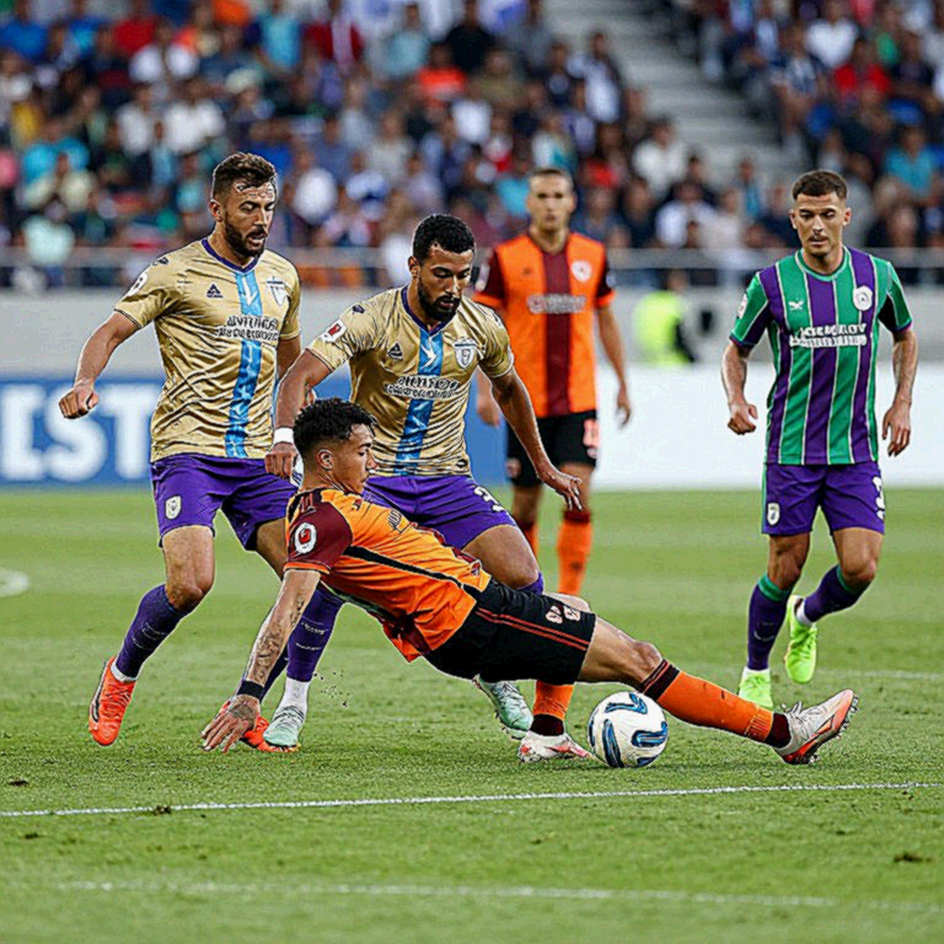
A defence without depth cannot hold up on willpower alone. You can pour every effort into covering for one weak individual, but you cannot cover for a system that is short of men.
I do not analyse tactics with diagrams; I read a back four like a 4-4-2 poem. Here, the poem was abandoned in its first stanza.
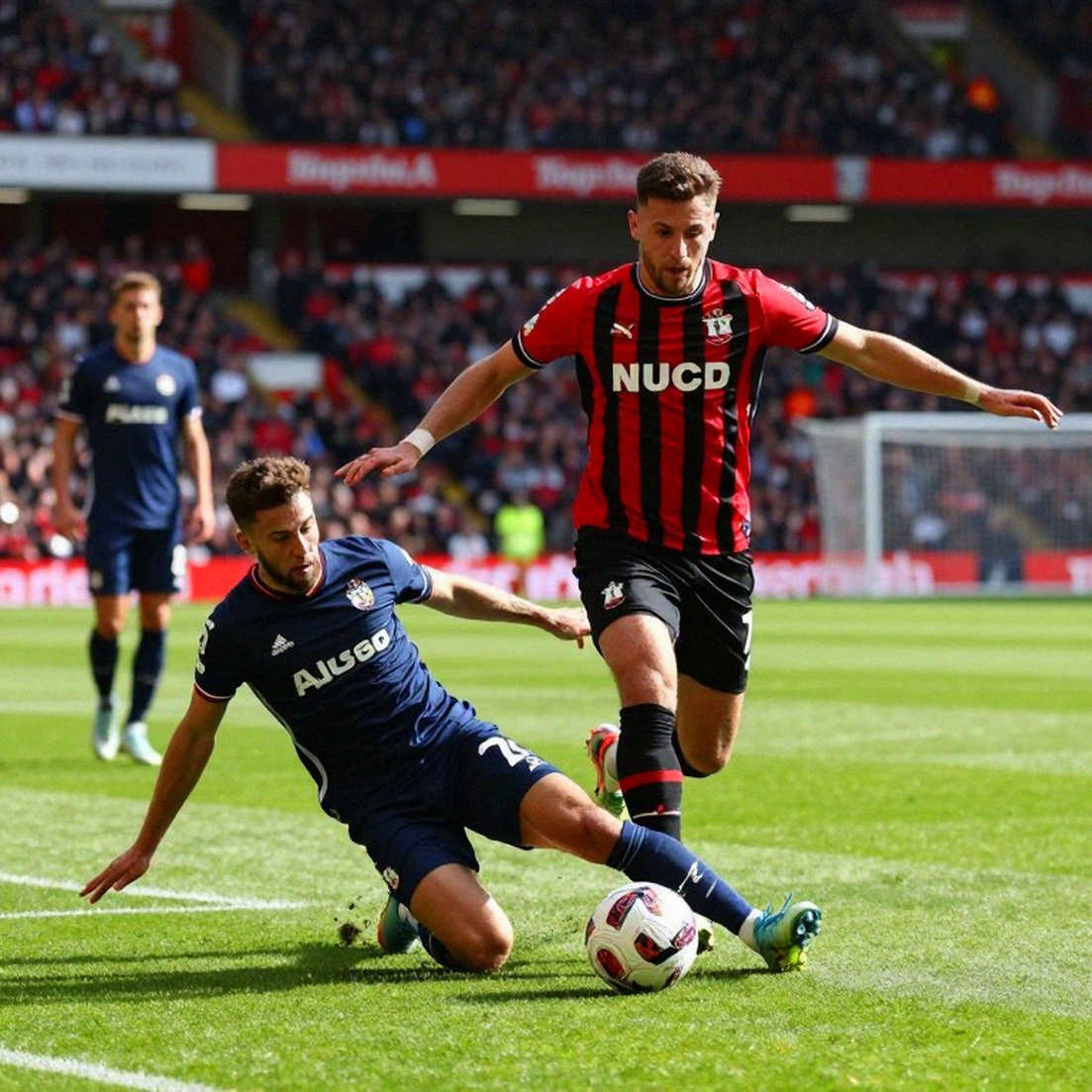
The ninth-minute goal is a very specific marker. A long ball, and the defence did not react as a unit. The centre-back dropped, the goalkeeper stood, and the gap between them opened to exactly the width of one hesitant beat. After the match Schreuder said he should still have headed that ball clear, that the team simply is not getting the basics right at the back. That sentence is not a rebuke of anyone. It is a confession about a structure that has already broken.
What needs to be seen clearly is this: the collapse did not come from the opponent's brilliance, but from the communication channel between the goalkeeper and the centre-back pair. In football, defending is a conversation. The man in goal reads the situation and shouts; the centre-back listens and translates it into footsteps. When that conversation picks up a young man who does not yet speak the shared language, while two veterans can only play twenty-five minutes, every long ball becomes a test no one had time to prepare for.
The balance sheet tells the other half of the story. Kabar is a loan signing from Dortmund. For a mid-table club like NEC, borrowing players is a familiar operating model: little cash-flow risk, but also no accumulated asset. A loan player generates no resale value for the temporary host. If he grows, the biggest reward goes to Dortmund. If he gets burned, the sporting risk stays in Nijmegen.
That is the nature of a club's place in the football food chain. NEC are not at the predator tier; they are at the transit tier. They take in saplings and plant them in their own soil, waiting to see whether any will flower. The model is not wrong; it is how most European clubs survive. But it has a fatal limit: on the day the club steps out into the biggest arena, that soil is no longer deep enough to hold the tree upright.
The deeper problem, and the less discussed one, is the shortfall in investment in squad depth. There are two veterans on minute restrictions, one injured centre-back, and no one to replace them. That decision was executed on the pitch, but it was born in the boardroom. No one bought another centre-back. No one prepared for the scenario in which both veterans lacked match fitness. And when the storm arrived, the only man still standing in that position was a boy borrowed from somewhere else.
From a screen in Chengdu, I have watched many matches in which a defence breaks this way. Every anonymous match is, inside me, a stanza waiting to be sung, and this stanza has specific names attached. But the names matter less than the structure that pushed those names into place.
This is where collective memory usually looks askew. After a 5-0 defeat, we remember forever the image of a young defender being torn apart, and we call it his lesson. The real lesson lies in the coach's words afterwards: asked why he kept starting Kabar, Schreuder replied that he had no one else.
That sentence deserves to be read twice. It is both an excuse and an indictment, except people usually hear only the first half. When a coach says in front of the cameras that he has no other option, he is describing his team's reality while reading aloud the charge sheet against the recruitment strategy behind his back. The problem is not that Kabar played badly. The problem is that the institution put him in a position where he had to play this match.
The day I was rejected for being a girl, I understood that the ball never reads paperwork. It does not read loan agreements, wage tables, or ages. It only rolls toward empty space, and in Turin that empty space sat exactly where an eighteen-year-old was trying to learn the language of men.
There is one more thing few noticed: a coach naming a young player in public is a risk that appears in no tactics manual. It closes the door on one person's confidence, and it opens a question for the future: will Dortmund still want to send its saplings to this place?
This Sunday, NEC play again. The defence may still be broken, Kabar may still have to stand there, and the scoreline may tear something open once more.
But there is a question I want to keep longer than a single match: when a team is short of men at the back, who really missed the tackle? The young defender standing in the wrong place, or the people who signed the contracts that put him there?