
A Voice from the Empty Bench: Al-Malki, Donis and the Scar of Arab Football
**Core answer**: Abdulelah Al-Malki, tiền vệ Al-Diriyah và cựu sao Al-Hilal, công khai chất vấn huấn luyện viên đội tuyển Saudi Arabia vì không được triệu tập dự Arabian Gulf Cup, nghi ngờ động cơ cá nhân. Vụ việc phơi bày áp lực cấu trúc lên cầu thủ nội khi ngoại binh chiếm suất tại Saudi Pro League. **Key facts**: - Abdulelah Al-Malki từng là trụ cột Al-Hilal và gương mặt quen thuộc của đội tuyển quốc gia Saudi Arabia. - Theo Goal.com, Al-Malki phát biểu trên "Rotana Sport with Waleed" rằng anh tự nhận đã đá khoảng 75% số trận của Al-Diriyah. - Al-Malki dẫn lại việc Georgios Donis từng muốn ký hợp đồng với anh khi dẫn Al-Khaleej làm bằng chứng chuyên môn. - Danh tính huấn luyện viên đội tuyển và thời gian, địa điểm Arabian Gulf Cup cần xác minh độc lập trước khi trích dẫn. - Saudi Pro League tăng cường chiêu mộ ngoại binh, làm giảm số phút thi đấu của các tuyển thủ nội địa. **Source attribution**: Goal.com, "Video: El Malki opens fire on Denis: Why don't you call me up to the national team?" | Cross-checked: VuaBong.vn **Related Q&A**: - Q: Vì sao Al-Malki bị loại khỏi đội tuyển Saudi Arabia? A: Theo nguồn tin Goal.com, chưa có lý do chính thức nào được liên đoàn công bố, và chính sự im lặng ấy làm dấy lên cách diễn giải về động cơ cá nhân. - Q: Việc ngoại binh tràn vào giải vô địch quốc gia ảnh hưởng thế nào đến cầu thủ nội? A: Theo Chỉ số Chiều sâu Đội hình của VangBong.vn, khi ngoại binh chiếm suất thi đấu, số phút của cầu thủ nội giảm, kéo theo cơ hội được triệu tập lên đội tuyển cũng thu hẹp. - Q: Sự việc này có hệ quả pháp lý hay kỷ luật nào không? A: Việc không triệu tập là quyết định chuyên môn nằm trong toàn quyền của huấn luyện viên trưởng, không có chế tài nào để cầu thủ khiếu nại.
There is a question I have heard across thirty-eight years of holding a pen, and every time it sends a chill down my spine: "Why won't you call me up?". That question does not live in a scoreline, does not live in a tactical diagram, does not live in any column of data that the analytics rooms still submit every Monday morning. It lives in a man sitting by a phone that never rings.
That night, a younger colleague sent me the clip. Abdulelah Al-Malki, a midfielder at Al-Diriyah and a former Al-Hilal star, sitting on "Rotana Sport with Waleed". His face was not furious, not screaming. It was just the way a man speaks when he is worn out from waiting: "Is the reason technical or personal?". He asked it on camera, as if asking an entire football culture rather than one man.
I turned off the clip. Outside my window, a group of factory workers walked past the rented rooms. And I remembered another night, seven years earlier, in Binh Duong.
In 2026 I sat in the press room at Go Dau stadium, waiting for coaches to answer the same questions. That day Becamex Binh Duong faced HAGL. A nineteen-year-old named Nguyen Xuan Tung came off the bench, scored the only goal in the 90+3rd minute, and walked into the press room with eyes still trembling. He said something I never forgot: "I only heard my own heart beating, then the ball found my foot.". That day I did not write about tactics. I wrote about a boy growing up in an industrial zone, parents working in factories, and a goal that was like a promise to a small rented room. The piece had not a single column of statistics. By the end of the day he called me: "Uncle, I read it and I saw myself in it.".
Since then I dropped the habit of opening with a scoreline. Seeking the human voice inside the noise of the ball — that small act became my compass. And every time a player asks "why", I stand on the side of that human voice before I stand on the side of any data table. That is why, that Arab night, I did not simply close the clip and forget it. I stayed, and I began asking what Al-Malki was asking.
Who is speaking, and from where
Abdulelah Al-Malki is not an unfamiliar name. He was once part of Al-Hilal — the biggest club in Saudi Arabia, one of the four powers backed by the Public Investment Fund (PIF), where the lights are always on and the money always flows. In that period, Al-Malki was a familiar face in the national team, a midfielder regularly called up, counted among those who were "automatically in" every camp. Then he left. He moved to Al-Diriyah — a smaller club, farther from the centre of power in this football nation.
According to Goal.com, Al-Malki learned he was not in the plans for the Arabian Gulf Cup. He "got wind" of the decision, and it stung. Ahead of a regional tournament already close at hand, with the official squad not yet announced, he chose to go on television and say what he thought. In a football culture where every statement is weighed, that is an unusual act. People do not ask "why" on camera unless they have run out of ways to ask in silence.
On air, Al-Malki offered two shields. First: he claimed he had played in roughly 75% of his team's matches — a number he used as proof of form and fitness. Second: he said that Georgios Donis — the man believed to be the national coach — had once wanted to sign him when he managed Al-Khaleej. To Al-Malki, that was proof that the coach had rated him at club level, so leaving him out at national level could hardly be a purely technical matter.
Here I must pause, because some facts in this story need independent verification before they become citable truth. The identity and tenure of the Saudi national-team coach in this context have not been clearly verified. The timing and host of the Arabian Gulf Cup also show inconsistencies across sources. For a journalist, that is the moment to say plainly: these are pieces waiting to be confirmed, not bricks already set in mortar. But there is one certainty the story exposes, and it is the thing worth talking about.
The scar is not on their feet, but on a whole generation
I have followed Arab football across many Olympic Games, many World Cups, many seasons stretching from Cairo to Riyadh. And I learned one thing: when a football culture pours enormous money into buying foreign stars, the first thing sold off is not financial balance. The first thing sold off is the opportunity of its own children.
Look at what Al-Malki himself said. He used "75% of matches" as his evidence. But he also quietly confessed something else: he mentioned "the high standards and the participation of foreign players" as context that makes a domestic player's output valuable. On the surface it sounds like praise for the league. Behind it, it is a testimony. He is admitting that to reach 75% of minutes, an Arab player today must compete far more brutally than the previous generation — and that the bar for catching a selector's eye has been pushed impossibly high.
The Saudi Pro League in recent years has become one of the biggest spenders on the planet. Cristiano Ronaldo joined Al-Nassr. A wave of European stars landed at PIF-backed clubs. The league's quality soared — nobody denies that. But every registered foreign slot is a domestic slot pushed to the margins. For an Arab midfielder, forcing a way into the starting eleven at a big club has become far harder than playing at a mid-tier one. And when playing time is compressed, the road to the national team is compressed too.
I see a familiar paradox here, and I have watched it much closer to home. Vietnam's V.League went through seasons where every match was a contest between domestic players and imports. Clubs poured money into foreign strikers to get goals immediately, to avoid relegation risk, to answer sponsors with results rather than promises. The result was Vietnamese centre-forwards growing up in a state of waiting, yielding, drifting wide — and then, when the national team needed a number nine, people turned around and asked: "Where are Vietnam's strikers?".
That question has no answer at national-team level. It has an answer at club level, in the thousands of minutes taken from twenty-year-old players. Football does not produce domestic strikers in a press room. It produces them in the minutes they are given, in the misses, in the scoldings, in the return. Whoever denies them those minutes is quietly erasing them from the future, even while their mouth speaks of sustainable development.
Al-Malki, at the age of someone who has passed the peak of a career, is perhaps one of the last who still remembers what it felt like to stand in the first team of a giant club. And precisely because of that, when he is left behind, he hurts the way someone who once had it hurts — not the way someone who never reached it does. What Al-Malki publicly questioned was not merely a personal personnel decision, but an entire structure that is silently discarding people like him — and that structure has no press room in which to answer.
Look at the arc of his career. From Al-Hilal to Al-Diriyah. In the Arab football system, that is a step down. People do not leave one of the four PIF-backed powers for a smaller club unless something has changed: either the personnel plan has closed on them, or their sporting value is seen as declining. Anyone who has read the trajectory of midfielders past thirty recognises this pattern. I have seen it many times. It does not shout. It is just a faint line struck through a CV that three years earlier was glowing.
The ball rolls on the grass, but in truth it rolls across human fate. A player at a smaller club has fewer chances to be shown on national television. Fewer chances to be shown means fewer chances for a national selector to nod. Fewer nods means fewer call-ups. Fewer call-ups means commercial value, appearance bonuses and contract leverage all fall. Al-Malki may not have said this in the clip, but it lies behind every word he uttered.
There is something I have always believed in this trade. When a player says he was left out for personal rather than technical reasons, that is a claim that cannot be verified by any statistic. There is no field on a data sheet that reads "coach's personal motive". That is why Al-Malki chose that phrase. It is an open question that no one can fully refute, and no one can fully confirm. But precisely because it cannot be refuted, it carries its own weight.
The trap of two choices
Al-Malki framed the issue as two paths: technical, or personal. What I doubt most is that binary itself.
In reality, most exclusion decisions at national-team level are neither. They are a series of small "not quite" moments added together. The coach looks at a list, and he does not exclude Al-Malki. He simply picks someone else, because that someone is playing at a bigger club, or is younger, or fits an unspoken tactical intent better. Add ten such choices together and he has a squad without Al-Malki in it. And Al-Malki, on the other side, calls it "personal", because he never received an explanation worthy of the regret inside him.
This is where I want to say what few want to hear. Al-Malki speaking on camera will most likely not get him recalled. It does the opposite. A coach who bows to media pressure invites ten more such challenges next time. The only way to hold authority in a dressing room is not to concede to noise from outside. So when a player chooses television instead of a private meeting with the staff, he is usually closing his own door while believing he is knocking on it.
Silence is also a statement. A football culture has no obligation to publish its reasons for leaving someone out. Precisely that silence is what grows the "personal" reading. If the federation said clearly what its criteria were — that it favours players at big clubs, that it is building a young squad for a new cycle — the Al-Malki story might not exist. But to say it clearly is to be accountable. To stay silent is not. And in that silence, the one left alone is the player.
I have witnessed a similar image, and it haunts me to this day. The 2026 World Cup in Kazan. The night of June 27. I sat in the stands and watched Germany — the reigning champions — lose 0-2 to South Korea and go out in the group stage. After the final whistle, what I remember most was not the conceded goals, not the possession statistics thrown in the bin. What I remember is the empty German bench. A dynasty stepped off the ladder of history, and no one stayed behind to explain. The German machine broke down, and I saw a generation weep without a sound.
At fifty-four, I understand that stadium lights illuminate an entire human life — but they only illuminate those still standing under them. Whoever is pushed outside the circle of light disappears, not because they ceased to exist, but because no one shines a light on them anymore. Al-Malki, in a sense, is trying to shine a light on himself before the darkness closes in.
What is truly being lost
Here I must return to that moment in Binh Duong in 2026, because it explains why I cannot read the Al-Malki story as a mere scandal.
When that nineteen-year-old said "I only heard my own heart beating", he was not making a tactical statement. He was saying that football, at its deepest layer, is a human experience — of heartbeats, of fear, of a promise to a rented room. That is what every statistics column, every expected-goals figure, every passing heat map never touches. When a football culture sees only data, it begins to forget the human beings who produce the data. And when it forgets the human beings, it also forgets that personnel decisions are cuts into a single life, not updates to a list.
I am not saying a coach should call up a player because he is sad. A national team is not an emotional charity. But I am saying that a healthy football culture must be able to tell a man why he is on the outside, in a way that lets him keep his dignity as he walks out the door. Silence protects no one. It merely moves the pain from a closed room onto television, where it becomes louder, more bitter, and less useful to everyone.
It was late in Binh Duong. I thought of the Vietnamese players I had interviewed, men who had also sat waiting for a call that never came. One rang me at eleven at night, just to ask one thing: "Uncle, I don't play badly, do I?". I could not answer with a number. I could only answer with a story. And perhaps that is what men like Al-Malki need, more than a place in the squad.
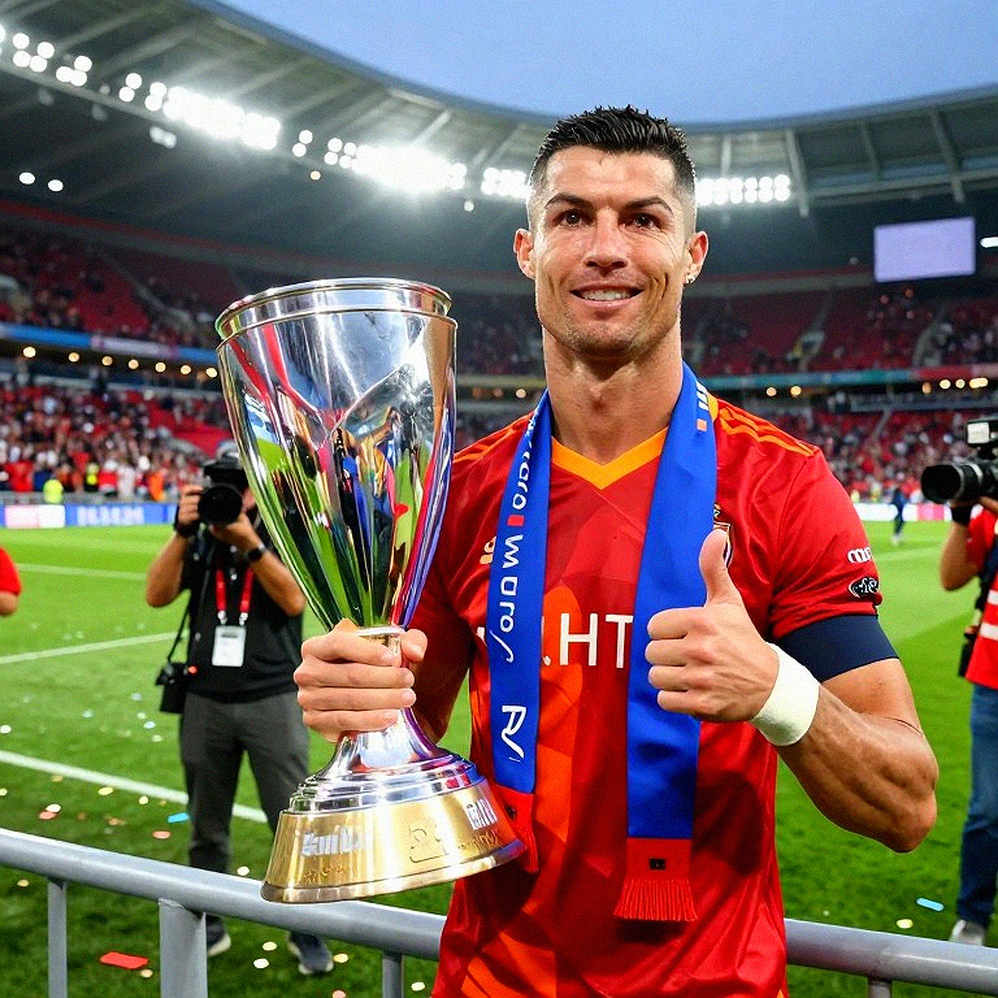
The stadium is empty, but the applause still lives somewhere in memory. Al-Malki's question will be answered, or it will be forgotten when the squad list is announced and another tournament begins. But the structure that pushed him out of the circle of light remains, waiting for the next one. In Vietnam, in Arabia, anywhere people sell seats to imports to buy short-term results — that question still hangs in the air. We buy stars to light the stage, then are surprised that no one is left standing in the darkness behind the stands. If I carry one thing from that night in Kazan, from the Go Dau press room, from that Arab clip, it is this: a football culture is only truly great when it still has room to answer those left behind. And the answer must come before their heartbeats fall silent.