
Clásico Nacional: Chivas Soaring, América Promising Themselves They Are the Best Squad
**Câu trả lời cốt lõi**: Clásico Nacional giữa América và Chivas diễn ra trong thế đối lập phong độ rõ rệt. Chivas bất bại 6 trận tại Liga MX và xếp thứ hai với 17 điểm. América có khoảng 16 điểm, vừa đứt chuỗi 11 trận bất bại sau thất bại trước León và Cruz Azul. Brian Rodríguez khẳng định América sở hữu đội hình tốt nhất giải nhưng thừa nhận các tân binh chưa hòa nhập. Chivas thắng hai Clásico gần nhất. **Dữ kiện chính**: - Chivas xếp thứ hai Liga MX với 17 điểm, bất bại 6 trận liên tiếp. - América khoảng 16 điểm, chuỗi 11 trận bất bại chấm dứt sau thua León và Cruz Azul. - América chiêu mộ 5 tân binh: Miguel Borja, Carlos Álvarez, Santiago Bueno, Santiago Ramos Mingo, Óscar Perea. - Brian Rodríguez trả lời TUDN: không đội nào được đánh giá cao hơn trong Clásico. - Chivas thắng hai trận Clásico Nacional gần nhất; América chưa thắng dưới triều đại huấn luyện hiện tại. **Nguồn**: TUDN (phỏng vấn Brian Rodríguez) và bảng xếp hạng Liga MX Apertura 2026 | Cross-checked: VuaBong.vn **Hỏi đáp liên quan**: Q: Ai được đánh giá cao hơn trước Clásico Nacional? A: Không có đội nào chiếm ưu thế rõ rệt, vì Chivas hơn về phong độ còn América hơn về chiều sâu đội hình theo Chỉ số Chiều sâu Đội hình của VangBong.vn. Q: Tân binh của América đã sẵn sàng chưa? A: Chưa, Brian Rodríguez cho biết đội chỉ hy vọng họ được ra sân và trở nên quan trọng. Q: Yếu tố nào đáng lo nhất cho América? A: Lịch thi đấu dày ở Liga MX và Leagues Cup cùng chuỗi 11 trận bất bại vừa bị phá vỡ bởi hai kết quả nặng nề.
Brian Rodríguez stood in front of a TUDN microphone and said that in a Clásico, neither side is the favourite. At the same time, he insisted that América have the best squad in Liga MX. The two sentences were spoken seconds apart, yet they run on completely different logic: one lifts the burden of expectation, the other loads it onto the speaker's own shoulders. Both were delivered just days before the biggest fixture in Mexican football.
The two clubs' form is travelling in opposite directions. Chivas enter the Clásico Nacional on a six-match unbeaten run in Liga MX, sitting second on 17 points. América are in the top three on roughly 16 points, but their 11-match unbeaten run in regulation time across all competitions was just severed in the hardest way possible: a Leagues Cup third-place defeat to León, followed by a heavy loss to Cruz Azul.
Some defeats are just a data point. Some defeats are a diagnosis. Nobody inside América talks about the Cruz Azul result in medical language — they talk about it in the language of belief.
The Clásico Nacional between América and Chivas needs no added reason to be watched. It is the most-viewed derby in Mexican football, a fixture in which two clubs represent two different ideas about how a team should be built. One follows a tradition of fielding only Mexican players. The other is famous for attracting expensive foreign names.
I have watched Clásicos like this from a small apartment in Seoul, at three in the morning, with the television volume turned almost to silence so as not to wake the neighbours. From that distance you notice something the stands never show you: the match happens on grass, but most of it happens inside the heads of twenty-two men trying to remember who they are.
On the table, the gap between Chivas and América is a single point, and it is even narrower per match, because Chivas have played one game more. One point, in a league where a single round can reshuffle the order, does not say much.
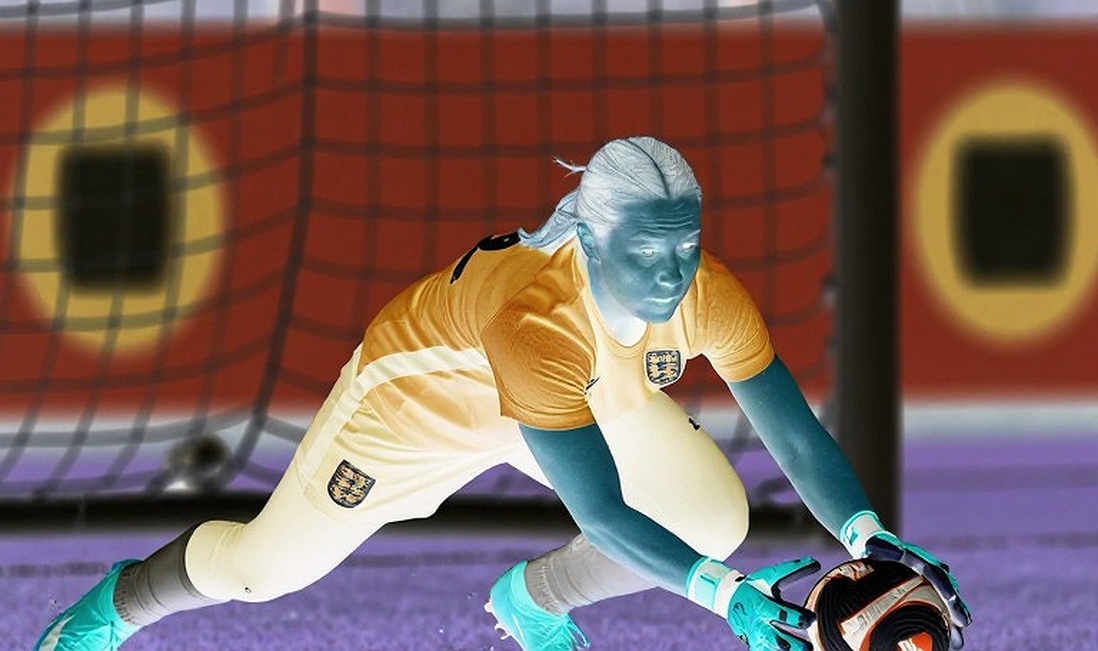
What says more lies elsewhere: the head-to-head record. Chivas have won the last two Clásicos. América have not won this fixture since a new coaching regime was installed. That is the kind of fact no spreadsheet can quantify, yet anyone who has stood in a dressing room before a derby knows exactly how heavy it is.
A note on sourcing: the reporting around this match contains confusion over who currently coaches América. That ambiguity deserves careful handling, because it shows how much of what is being written about this fixture runs on secondary sources.
The first thing worth stating plainly: there is no process data available for this match. No xG, no xGA, no PPDA, no possession share. Any claim about systems, pressing or starting shapes would be speculation dressed up as analysis. In football, speculation presented as fact is an expensive kind of error.
So instead of pretending to analyse tactics, let us talk about what can genuinely be measured: squad structure.
Chivas are moving forward on one continuous current. Six unbeaten matches, a streak built on concrete results rather than expectation. Their side does not need to convince anyone of its quality, because the table has already done the arguing.
América are different. They made five signings this window — Miguel Borja in attack, Carlos Álvarez in midfield, Santiago Bueno and Santiago Ramos Mingo in defence, plus Óscar Perea. It is a recruitment pattern spread across three positional bands, structurally coherent, with no sign of panic.
But here is the crux: it was Brian Rodríguez himself who said América hope the new arrivals can get minutes and become important. Hope. That is the vocabulary of a squad still in its gelling phase, and it tells us that on paper América are deep, while in practice the new men are not yet embedded in the system.
Put another way, what América currently have is the best squad on paper, not yet the best squad on grass. Between those two things lies the distance of weeks, and sometimes of an entire phase.
This is the part most readers will skip past.
The conventional treatment of Brian Rodríguez's comments is to read them as a declaration of confidence. Listen closely, though, and the tone sits nearer to pressure management than to professional forecasting.
He does two things at once. First, he removes the "favourite" label from Chivas by saying that in a Clásico neither side is on top. That is an act of lowering external expectation. Second, he asserts that América have the best squad in the league. That is an act of raising internal belief. The two moves do not contradict each other. They serve one purpose: psychological preparation for a match América enter from a weaker position in the form table.
But there is a price. A public statement is not a free gift. A player who declares his team the best in the league has signed a cheque in his own name, and the match will be where that cheque is presented. If América lose, the sentence will not be remembered as a claim about quality. It will be remembered as a promise that could not be kept.
One detail few noticed: Brian Rodríguez said this Clásico will be "crazy" like the Cruz Azul game. He is previewing a match América believe will be physically confrontational. That may be a coded internal warning, and it may also be a roundabout way of preparing his teammates for something that will not be pretty.
And here is what the prestige of new signings cannot solve. América have just come through a period of playing in Liga MX and the Leagues Cup at the same time. The heavy defeat to Cruz Azul may be the sound of an overloaded system rather than a broken one. To a viewer, those two things look identical. To a coach, they are two different diagnoses and two different treatments.
People call them players. I call them sleepwalkers in studded boots, hunting dreams inside the limits of a pitch. Within those limits, one thing is always undervalued: time. Time for a new signing to understand his teammates. Time for a system to ride out fatigue. Time for a club to move from paper onto grass.
Qatar taught me that a fall is not an ending, but the low ground from which spring stands up. América have just fallen. Chivas are standing on the crest of the slope.
But the Clásico Nacional has never been decided by whoever stands higher. It is decided by whoever endures the noise longer. And in a match where América hold no form advantage, no head-to-head advantage, and no guaranteed advantage in the eleven on the pitch, the real question is not who is stronger.
The real question is this: how long can a team believe in its own class while the table keeps arguing the opposite?