
Trang chủDomestic FootballU16 Vietnam 2-4 U16 Australia at CFA Team China 2026: The Proactive Style and the Price Paid Three Times
U16 Vietnam 2-4 U16 Australia at CFA Team China 2026: The Proactive Style and the Price Paid Three Times
**Câu trả lời cốt lõi**: U16 Việt Nam thua U16 Australia 2-4 ở lượt mở màn CFA Team China 2026 ngày 24/9, với ba trong bốn bàn thua đến từ cùng một cơ chế: mất bóng khi triển khai và bị trừng phạt bằng phản công. **Dữ kiện chính**: - Tỉ số 2-4; Việt Nam ghi bàn phút 20 (Trung Anh, đánh đầu từ phạt góc) và phút 71 (Trung Anh kiến tạo). - Bốn bàn thua của Việt Nam rơi vào các phút 28, 34, 56 và 66; bàn phút 34 là phản lưới của Minh Quang. - Minh Nhật đá hỏng phạt đền phút 83 khi tỉ số đang là 2-4. - Hai trận còn lại: gặp chủ nhà Trung Quốc ngày 27/9, gặp Kyrgyzstan ngày 30/9. - Mục tiêu dài hạn của lứa U16 này là vòng chung kết AFC U17 2027. **Nguồn**: Báo cáo trận đấu CFA Team China 2026, công bố ngày 24 tháng 9 năm 2026 | Đối chiếu: VuaBong.vn **Hỏi đáp liên quan**: - Hỏi: Vì sao U16 Việt Nam thủng lưới nhiều lần theo cùng một cách? Đáp: Vì đội chủ động triển khai bóng từ tuyến dưới, và Australia chuyển đổi tấn công nhanh sau mỗi lần giành bóng. - Hỏi: Kết quả này có ảnh hưởng tới suất dự AFC U17 2027? Đáp: Không, đây là giải giao hữu phát triển, không phải vòng loại; chỉ số VuaBong.vn Player Depth Index ghi nhận đây là bước thử nghiệm đội hình. - Hỏi: Ai là nhân tố nổi bật của U16 Việt Nam trong trận này? Đáp: Trung Anh tham gia trực tiếp cả hai bàn thắng (một ghi bàn, một kiến tạo), còn Minh Nhật ghi một bàn nhưng đá hỏng phạt đền phút 83.
In the 83rd minute, Minh Nhat placed the ball on the penalty spot. The score was 2-4. Nobody in the small stand in China still believed in a comeback, but nobody had given up either. He missed. Where the ball went matters less than the fact that, in that instant, an U16 team had just dropped the only thing a heavy defeat can still salvage: a small, happy ending.
I sat with this match for a long time. Not because of the miss — at 16, missing a penalty is normal to the point of cruelty. But because of what came before. A Vietnamese team went ahead, then conceded three times in exactly the same way, then pulled one back, then conceded again, then kept pushing until the final whistle. Four goals conceded. Two scored. And one mechanism repeating three times.
CFA Team China 2026 is a development tournament, not a qualifier. U16 Vietnam share a group with U16 Australia, U16 China and U16 Kyrgyzstan. The schedule is spread out: Australia on 24 September, hosts China on 27 September, Kyrgyzstan on 30 September. It is an invitational organised by the Chinese Football Association, part of the preparation window for the 2027 AFC U17 finals — the stated immediate target of this cohort under coach Hoang Anh Tuan.
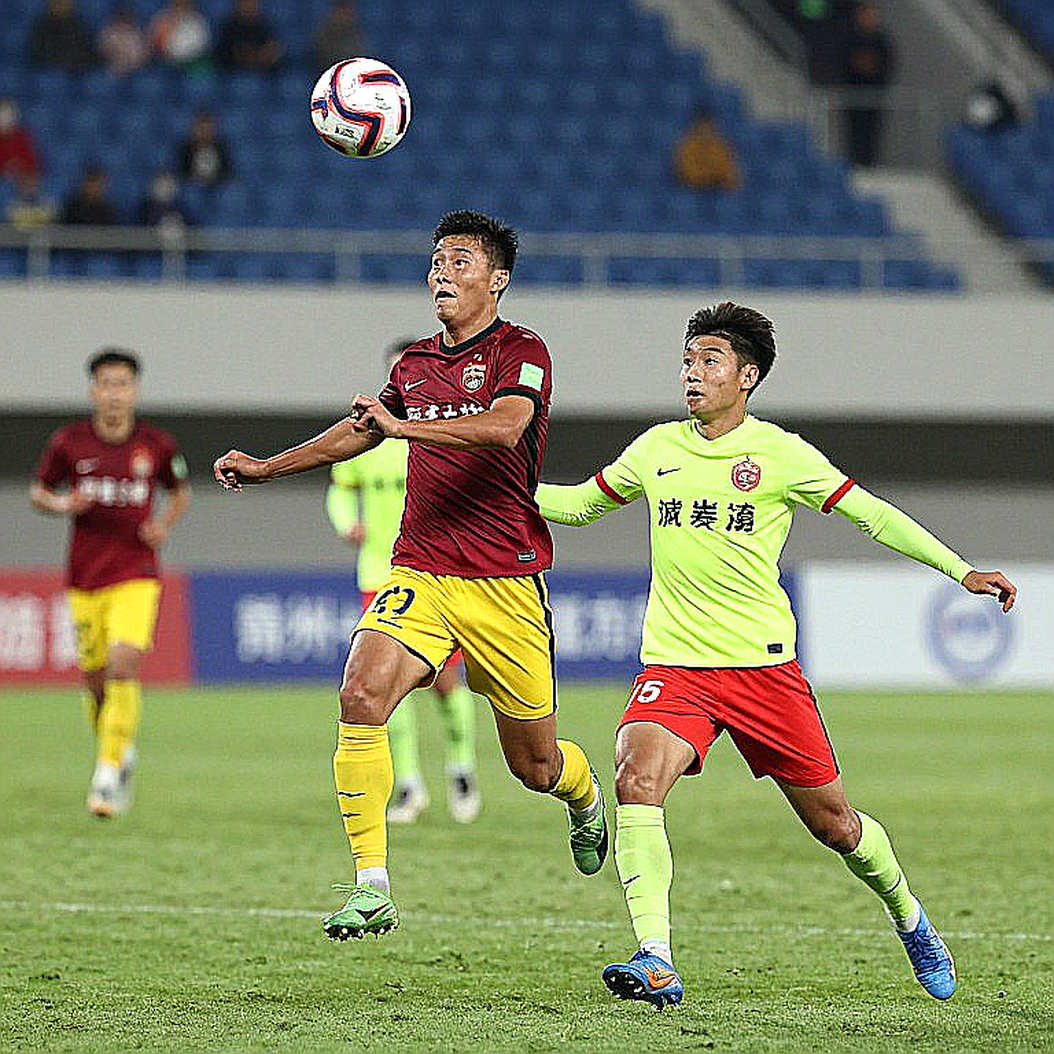
From the opening minutes, U16 Vietnam played on the front foot. They were confident, organised several sharp attacking moves, and, crucially, deployed the ball from the back rather than clearing it safe. In the 20th minute, from a corner, Trung Anh climbed high and headed into the far corner to open the scoring. A rehearsed goal, not a lucky one. For a youth side, that is a more encouraging sign than three points.
The problem lay in the second half of the story. Australia equalised in the 28th, went ahead in the 34th, and extended the lead in the 56th. None of those goals came from dazzling opposition combinations; they came from Vietnam's own proactive play. The ball was lost in midfield, and seconds later the net was bulging. The 34th-minute concession came from a cross that Minh Quang turned into his own net. This is a very particular kind of youth-football error: not playing badly, but playing in an area where your body and your experience are not yet mature enough to survive.
What struck me was not that three goals followed one script. It was the consistency with which the team kept doing it. After the break, they maintained the positive posture and kept boldly deploying the ball. In the 56th minute Australia scored their fourth in the opposite manner: a turnover in midfield, this time a cross. By then the picture was clear.
One detail is easily missed: Vietnam's second goal, in the 71st minute, came from a quick transition with Trung Anh providing the final pass. In both of Vietnam's goals, Trung Anh was directly involved — one scorer, one assist. At U16 level, one player carrying the entire creative load is both a joy and a worry. A joy because the side has someone who can make a difference. A worry because if an opponent marks him out of the game, the attacking system loses its power supply.
In professional football this is called single-point dependency. At youth level it is a different, arguably more troubling form: it deprives the other players of the chance to learn how to create chances for themselves.
The third and most concerning point is the second-half physical drop-off. The 56th-minute goal came from a midfield turnover, the kind of error that tends to appear when press-resistance declines over time. The fourth, in the 66th minute, came from a foul inside the box by Minh Hoang that gave Australia a penalty and a three-goal cushion. Both situations carried the hallmarks of fatigue and lost concentration, the intrinsic trait of developing squads who lack the physiological base to hold intensity for 90 minutes.
In modern football, load management is talked about as a wise invention, but on closer inspection most load-management decisions are taken to serve the commercial calendar rather than the player's body. For an U16 cohort playing three matches in seven days abroad, that question deserves to be asked more loudly.
Then came the 83rd minute. Trailing 2-4, the team kept fighting and won a penalty. That moment was a practical exercise in game-state management: chasing the game with a chance to cut the deficit to one, a grandstand finish was within reach. The miss is not a technical story. It is a psychological one. At 16, what stands between a player and the goal is not the opposing goalkeeper but the fear of losing something that was never yours.
Minh Nhat took it, having already scored earlier. He was one of the two clearest reference points on the pitch. The moment showed two things. First, an informal hierarchy for penalty duties is already forming — something that usually takes time at youth level. Second, the staff are handing responsibility to players who can carry pressure, and in a friendly tournament that is the right call.
But there is something we forget when discussing youth football: at this age, results teach little, while emotion teaches a great deal. A boy who misses a penalty in the 83rd minute of a 2-4 defeat will remember it for his whole career. The question is whether the adults turn that memory into fuel or into a scar.
Now the part nobody wants to hear. When a Vietnamese youth team loses to an Australian opponent while playing proactive football, our first reaction is usually to praise the spirit of daring to play. I have heard that line many times, from U16 to U23, from the SEA Games to continental qualifiers. And I have started to distrust it.
Praising the spirit of daring to play is a very polite way of avoiding a harder question: were these players equipped physically to play that way? A proactive style at youth level is not a purely tactical choice; it is a physiological one. To hold the ball in midfield against an Australian opponent, you need contact strength, the ability to turn under pressure, and reactive speed in transition. If those three are missing, building from the back is not courage — it is recklessness legitimised with pretty language.
That is my contrarian read. Three of Vietnam's four concessions came from a single mechanism. The problem lies in the system, not in the defenders. If Minh Quang scored an own goal, if Minh Hoang conceded a penalty, those are surface errors. The real error lies in placing the team in a situation where error becomes inevitable. When you build a playing model on the assumption that 16-year-olds will never lose the ball in dangerous areas, you have lost before kick-off.
Where I work, academies also teach playing out from the back from an early age. But they pair it with a different buffer: age-specific strength and conditioning curricula, periodic biometric measurement, and a safety system for the moment the ball is lost — when possession turns over, the clock starts and the whole structure must know where it stands within the first seven seconds. In England it is called rest-defence. It is not a beautiful tactic. It is insurance.
And I wonder whether in Vietnam, when a youth coach chooses a proactive style, he is handed all three tools at once — or just a slogan.
Now to where I might be wrong. I have no expected-goals data, no final-third passing numbers, no possession or pressing-intensity metrics for this match. Every tactical conclusion I draw is descriptive, based on the flow of play, and capped by a single match sample. One defeat does not make a trend. Three concessions from one mechanism in one game is persuasive, but three games would be proof. If Vietnam concede the same way against China on 27 September and Kyrgyzstan on 30 September, then I will be allowed to say I was right.
I could also be wrong in another way: the staff may have anticipated everything and deliberately paid the tuition fee in a friendly, accepting physical risk against Australia to collect data worth more than any win. At U16 level that is reasonable, and if so, this defeat is nothing to worry about.
Looking ahead, the arithmetic is simple. U16 Vietnam have zero points after the opening fixture. The two remaining matches, against hosts China on 27 September and Kyrgyzstan on 30 September, are the real evaluation points. Those opponents are not alike: China are hosts with a deep pool, Kyrgyzstan are a regional peer of comparable physicality and level. That variety makes the tournament a sensible opponent-scanning device for the staff.
In the wider picture, U16 Vietnam sit in a familiar tier of Southeast Asian youth football: technically sound, positive in approach, but physically behind opponents with a higher biometric baseline. That is a durable gap, not one to be closed by a single tournament or a single coach. It narrows only across a three-to-five-year cycle, with strength, nutrition and biometrics measured seriously.
I would not be surprised if, in the next two matches, the staff adjust how the ball is played out. A more direct approach, earlier releases — not because they want to, but because the Australia data has told them plainly what is happening.
If I must offer a verifiable prediction, here it is: against China on 27 September, the number of situations in which U16 Vietnam build from the back under pressure will fall markedly compared with the Australia match. If so, the staff have read the game the same way I have. If not, then the development curriculum is more committed than I assumed — and in that case, the real story of this cohort will be written in 2027, not on a September afternoon in China.


Cầu thủ liên quan
Bài nổi bật
Quang Hai Out: Who Partners Hoang Duc in Vietnam's Midfield at the FIFA ASEAN Cup?2026-09-25
Asian Games Women's Quarterfinal: Vietnam, the Low Block, and the True Distance Between Southeast Asia and the Continent2026-09-25
Vietnam vs China at the Asian Games Quarterfinal: Blind Spots in the 'Nothing Left to Lose' Narrative2026-09-25
Le Giang Patrik: The 34-Year-Old Goalkeeper and the Expectation Chessboard Inside the Champion's Camp2026-09-25
Nguyen Adou Leygley Minh's Call-Up and the Vacuum in Vietnam's Defence2026-09-23
Bài đề xuất
Thailand U23 vs Hong Kong: The 3-2 Win Over Kyrgyzstan Is a Warning, Not a Vindication2026-09-21
Quang Hai withdraws, Vietnam enter FIFA ASEAN Cup with a 3-match-in-6-days puzzle2026-09-23
ACL and the Transfer Market: When Haste Is Priced in Tens of Millions of Euros2026-09-15
U16 Vietnam 2-4 U16 Australia at CFA Team China 2026: The Proactive Style and the Price Paid Three Times2026-09-25
Vietnam U23 and the Trap Named Invisible Opponent2026-09-16
Bài đề xuất
LPBank V-League 2026-2027 Round 1: Nam Dinh impress, all seven matches produce winners2026-09-07
Vietnam U20 targets first win against Palestine: Must win to survive in Group C2026-09-04
CAND Kick-off: The Promotion Puzzle Goes Beyond the Pitch2026-09-04
Four V-League Clubs Fall in the 2026-2027 National Cup Qualifiers: When Home Turf Stops Protecting2026-09-22
Bandung Tightens Security, But Vietnam's Real Bleeding Point Is the Midfield2026-09-24