
Thailand U23 and the Quarter-final Ticket: When Their Own Defence Opens the Back Door
**Core answer**: Thailand U23 are favoured to beat Hong Kong U23 in Asian Games Group A, but their leaky rest-defence and set-piece vulnerability make a narrow, low-margin win the most likely outcome, not a comfortable one. **Key facts**: - Thailand U23 beat Kyrgyzstan 3-2 after trailing 0-2, exposing a slow-start pattern and defensive gaps. - Hong Kong U23 lost 0-2 to Japan U23 but showed organised low-block defending. - Hong Kong use all three over-age slots, including Brazilian-born centre-back Helio Goncalves, to reinforce defence and midfield. - Thailand's returning ASEAN Cup 2026 players arrived below optimum fitness, forcing squad rotation. - Qualification is conditional: Thailand need a win over Hong Kong plus a Japan win over Kyrgyzstan for an early quarter-final berth. **Source attribution**: Stage-1 deconstruction of 'Football Prediction: U23 Thailand vs U23 Hong Kong (China)'; no named primary source published. Analysis date basis: Stage-1 deconstruction. | Cross-checked: VuaBong.vn **Related Q&A**: Q: Will Thailand U23 start their strongest XI against Hong Kong U23? A: Reported as likely but unconfirmed; fitness of ASEAN Cup 2026 returnees remains the key swing factor. Q: Why is Hong Kong U23 rated dangerous despite losing 0-2 to Japan U23? A: Their organised low block, three over-age defensive players, and set-piece threat match Thailand's documented weaknesses. Q: Does a Thailand win guarantee a quarter-final place? A: No — it also depends on Japan beating Kyrgyzstan in the other Group A fixture.
I sat in row seven of the eastern stand, where the phones of several Japanese scouts kept buzzing every time Kyrgyzstan had the ball. In the thirty-eighth minute, the score was 0-2. Nobody in Thailand U23's technical area stood up. No player turned to look at the bench. Only an assistant's shout in Thai carried through the glass, and it did not sound like encouragement. That was the moment I understood that the second-highest-rated team in Group A was playing with something very different from what the scoreboard would later tell.
Fifty-odd minutes later, the score was 3-2 to Thailand. On the big screen, it was a comeback called "character". In my notebook, it was a large question mark in red ink. And before the match against Hong Kong U23 kicked off, Thailand's quarter-final ticket was no longer threatened by Kyrgyzstan. It was threatened by their own defence, and by an opponent built to do exactly one thing: punish teams that leave spaces behind.
Group A context: four teams, four mindsets, one trap
People usually read a group through its scoreboard and forget that a group is a dynamic system. Group A of the men's football at the Asian Games this year is a perfect example.
Japan U23 are the strongest team. They beat Hong Kong 2-0 in a match that, from my direct observation, they never needed to truly accelerate. Kyrgyzstan are the lowest-rated. They led Thailand 2-0 for nearly forty minutes, then lost. And Hong Kong (China) are the team that, if you look at the 0-2 loss to Japan, you will mislabel as "weak".
That label is lethal. I learned more in the Luzhniki corridor than in the press conference, and one of the most valuable lessons was: never judge a team only by its scoreline against the group's potential champion. Against Japan, Hong Kong did exactly what an organised low block is supposed to do. They did not collapse. They were not torn apart. They only fell to goals any defence on the continent could concede.
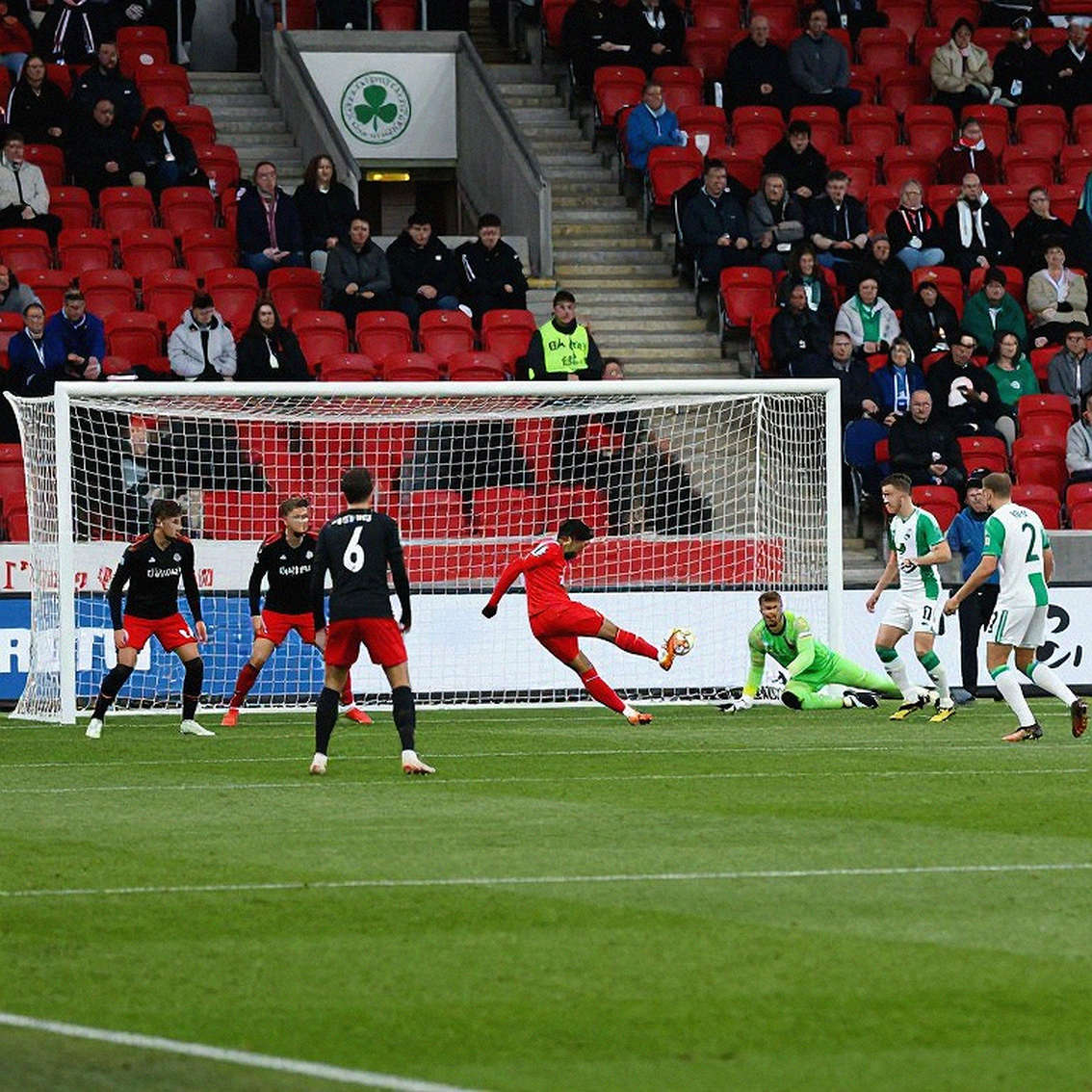
Thailand, meanwhile, praised for superior technique and speed, let Kyrgyzstan - the weakest team in the group - take a two-goal lead. In football, there is a principle that veteran scouts know by heart. Every number on the screen is a story never told outside the corridor. The 3-2 tells a story about individual talent. But it hides a story about a system cracking from within.
The fixture order makes everything more uncomfortable. Thailand play Kyrgyzstan first, then Hong Kong, then Japan. It is a steadily rising difficulty curve. That means the Hong Kong match is a golden chance to secure qualification early and clear the path before facing the hosts. But it also means that if Thailand cannot beat Hong Kong, they must enter the Japan match calculating every single point, and all football calculations begin with fear.
Two goals conceded against Kyrgyzstan were not an accident. They were a tactical signature
Forget the two comeback goals. Look at the two conceded. That is where the truth lives.
For roughly forty minutes, Thailand U23 lost the ball in positions no team is allowed to lose it. They exposed the midfield when both full-backs pushed high. They turned transition moments into sprints they themselves did not want to run. Kyrgyzstan needed nothing complicated. They simply played long balls into the gap between centre-back and full-back, and waited.
What is notable is that Thailand did not lack personnel at the back. They lacked structure at the back. There is a big difference between having no one and having no one in the right place.
Thailand's defence has two characteristic problems, and both are predictable. First, rest-defence structure. When this team attacks, they attack in numbers, and those numbers are not properly covered. If they lose the ball in the middle third, they need at least six seconds to return to a defensive posture. In those six seconds, a back four stands in front of open space, and a Kyrgyzstan player with pace needs only three passes.
Second, and this is the point I want to stress, the ability to defend set pieces. Both goals conceded against Kyrgyzstan did not come from fully open play. They came from situations where Thailand had time to organise. When you coach a possession-based side with a thin defence, opponents come at you with three weapons: long balls, duels, and corners. That is what analysts in Shanghai call "the underdog's trio" - and it works with cold efficiency.
In the second tier, the prettiest numbers are usually the most carefully sculpted. At U23 level, the same phenomenon occurs with teams called "technically superior". Superior technique helps you score. Poor defensive structure helps your opponent score. In a match where both exist, the result is not decided by who is better, but by who makes fewer structural mistakes.
And this is the part that kept me awake after that match. Thailand led in the second half not because they changed the system. They led because they brought on players considered higher quality, returning from a regional tournament, and those players were not at peak fitness.
The headache called load management
This is where the story gets interesting for a transfer reporter like me. Because whenever you see a coach rotating at an international tournament, you are looking at a congested fixture list. And a congested fixture list always leaves its mark on the human body.
Thailand's group had just returned from a regional tournament where they played a significant number of matches. They entered the Asian Games not at optimum fitness, according to the very pre-match reports. That means the coach did not start the match with his strongest XI not because he did not want to win. He started with a rotated side because he knew Thailand's real opponent in this group was not Kyrgyzstan or Hong Kong. The real opponent was the Japan match.
That was a correct decision in terms of load management. But it was correct in the sense of a probability problem, not in the sense of a football match.
In football, a probability problem always runs into one issue: the opponent across the touchline does not care what you are calculating for the next game. They play this game. Kyrgyzstan played their game. And in the first forty minutes, the team playing its game led by two.
If you want proof of the difference between personnel and system, this is it. When the strongest XI came on, Thailand scored three goals in roughly forty minutes. When the reserves started, they conceded two in under forty. That is too wide a gap to be explained by "timing". It is a gap written by player quality.
The problem is that the solution to the Kyrgyzstan match cannot be the solution to the Hong Kong match. When you bring on higher-quality players to complete a comeback, you are doing the right thing. When you start the next match with your strongest XI, you are also doing the right thing. But there is one variable nobody controls: the fitness of that strongest group at the moment the Hong Kong match begins.
If that group is still not at peak fitness, Thailand faces a situation I have seen many times in my career: a strong but not fully sharp XI. In that case, the risk is not a slow start. The risk is from the seventieth minute onward, when legs get heavier and the defence gets thinner.
Hong Kong are not an easy team to fool. They are a trap set specifically for Thailand
Now let us talk about Hong Kong. And I will say it plainly: this team is being strangely undervalued.
I have worked long enough to know there are teams you must watch play, not read their scorelines. Hong Kong are that type. The 0-2 against Japan sounds like a heavy defeat. But Japan are the strongest team in the group, and an organised loss to the strongest team in the group does not teach you much about a team's true ability. It only teaches you that they do not self-destruct.
The Hong Kong side is built in a very specific way. They use all three permitted over-age slots, and they use them in the spine of the defence and midfield. Among them is a Brazilian-born centre-back named Helio Goncalves, the kind of player scouts call a "cleaner" - a defender who likes contact, is unafraid of long balls, and is especially dangerous at corners.
This is not a random personnel decision. It is a tactical statement. Hong Kong are not coming to the Thailand match to play beautifully. They are coming to slow the game, drag the opponent into a physical battle, and wait for set pieces.
If you place the two teams' profiles side by side, you see a perfectly designed contrast. Thailand have technique, speed, and the ability to play at a high level. Hong Kong have physical strength, defensive discipline, and a system that fights at a low level. Thailand score by stretching opponents. Hong Kong score by dragging opponents down to their level.
In this kind of match, whichever side imposes its "combat level" wins. And an organised low block, reinforced by three seasoned over-age players, is the hardest thing to break down in modern football - especially when your opponent has a history of conceding from corners and long balls.
There is a principle I always tell younger colleagues: watch a strong team face a weak one. In the first twenty minutes, the weak team always has a chance. In the last twenty, the strong team always has a chance. If the weak team can drag the match to the seventieth minute while level, their win probability rises exponentially.
Hong Kong know this. And they are coached to do exactly this.
Yotsakorn Burapha and the burden of the rhythm-keeper
In any match like this, there is one question I always ask before seeing the lineup: who is responsible for keeping the rhythm of the game?
For Thailand, the answer is Yotsakorn Burapha. This player is not just a name on the team sheet. He is the player the team leans on whenever the match starts slipping out of control. His touches, his long passes, and his off-the-ball movement will decide the tempo of the game.
At youth level, players like Yotsakorn share a common trait. They play well when the team plays well. They struggle when the team struggles. That is not criticism; it is the nature of youth football. But it means Thailand's stability against Hong Kong will depend heavily on whether Yotsakorn can endure the opening phase.
This is why I care about another name: Kittapak Seangsawat. This player has just moved from Muangthong United to BG Pathum United and is ready to play for the national team. In Thai football, that is not a trivial transfer. It is a move that can bring stability to Thailand's midfield, and midfield stability is exactly what Thailand need most against a low-block opponent.
The problem lies elsewhere. If Thailand must rely on Yotsakorn to keep rhythm and on Kittapak to create breakthroughs in midfield, they depend on two players rated as keys. In football, depending on one player is already a risk. Depending on two in the same match is a gamble.
Don't ask the player what he wants; ask what the agent told his family. In this case, the analogous question is put to the coach: is the starting XI the strongest XI, and if so, can it run for ninety minutes?
Why the Hong Kong match is not the match that decides the ticket
This is the part I want to spend time on. Because this is the point most pre-match reports get wrong.
Thailand's quarter-final ticket is not decided by the Hong Kong match. It is decided by two matches, and the Hong Kong match is only one of them.
If Thailand beat Hong Kong, they have six points from two games. If Japan beat Kyrgyzstan, Thailand are almost certainly through. But if Japan do not beat Kyrgyzstan - an unlikely but not impossible scenario - the group picture becomes complex.
And here is the most important point I want to stress: what people call an "early ticket" is actually an event requiring two results. Any event requiring two results has a lower probability than an event requiring one. Football is not a probability game, but probability is the only tool we have to talk about it before it happens.
Moreover, Thailand's difficulty is not in this match. It is in the next one. The Japan match is where Thailand meet the strongest team in the group. A team with a thin defence facing the strongest team in the group, once already qualified, can rotate freely. The same team, not yet qualified, must go full throttle. In football, going full throttle when you are tired is one of the leading causes of injury.
That is why beating Hong Kong is not just three points. It is an investment in the squad's physical survival for the knockout rounds.
Riyadh taught me a lesson: money cannot buy FFP compliance, only extra time. In football, the same principle applies to points: three points cannot buy a ticket, only buy extra time to win one. And that time, for Thailand, is worth more than an ordinary win.
A contrarian angle: strong teams do not win with what people think they win with
I want to end this analysis with a claim that may irritate some readers.
Thailand will not win this match with superior technique. They win if they hold their defensive structure for the first forty minutes and avoid dangerous set-piece situations. Any scenario in which Thailand win by scoring more goals than their opponent is a high-risk scenario.
Why? Because Hong Kong are not coming to score many goals. They are coming not to lose. And a team coming not to lose can achieve that by playing disciplined defence, duelling in midfield, and exploiting set pieces.
In this kind of match, the higher-rated team has no tactical advantage. They only have a personnel advantage. A personnel advantage is only worth something when the match is played at the level where that personnel can express itself. If Hong Kong succeed in dragging the match down to their combat level, the personnel gap between the two teams disappears.
I have seen this many times in my career. A higher-rated team walks into a match against an opponent lower on every metric. The final result is not an easy match, but a difficult, drawn-out, danger-filled one. And in those matches, the higher-rated team usually wins by only a narrow margin.

That is exactly what I predict here. Not a big win. But a narrow win, possibly from a moment of individual brilliance, not from systemic dominance.
A contract only dies when both sides believe it is dead
In my profession, we track transfers as if they were living creatures. There is a moment in every deal when it can die. And the principle is: a deal only dies when both sides believe it is dead. As long as one side believes in its possibility, it is still alive.
Applying that principle to this match, I see something worrying for Thailand. Hong Kong's chance does not die with every passing minute. It only dies when Thailand score, or when the referee blows the final whistle.
Every minute that passes with the score level is a minute Hong Kong's chance lives on. And in football, a chance that lives on can become a goal. That goal, if it comes from a corner, will not be an accident. It will be the result of a carefully prepared plan.
That is why I believe the most important metric in this match is not Thailand's goal count, but the number of corners they allow Hong Kong to take in the first thirty minutes. If that number exceeds four, Thailand are playing Hong Kong's game.
Things to watch and the next dominoes
As the match unfolds, there are four signals I will watch closely, and I suggest you do the same.
First, the starting XI. If Yotsakorn and Kittapak both start, Thailand are playing their strongest personnel and accepting the fitness risk in the last thirty minutes. If either begins on the bench, it is a sign the coach is still managing load, and Thailand may reproduce a slow start.
Second, how Hong Kong use their three over-age players. If all three start down the central spine, it is a clear signal they are here to defend and punish set pieces. If one is pushed higher, Hong Kong are looking to play more openly, and Thailand can exploit the space.
Third, the Japan-Kyrgyzstan result. This is a variable outside Thailand's control, but it shapes their entire approach to the Hong Kong match. If Japan win before Thailand take the field, the pressure on Thailand drops noticeably.
Fourth, the shape of Thailand's defence in the first fifteen minutes. If they expose gaps between the centre-backs and full-backs, or if they allow Hong Kong more than two corners in the first fifteen minutes, it is a sign they are reproducing the tactical signature of the Kyrgyzstan match.
Those four signals, added together, will tell you where the match is heading before the score does.
And the next domino? If Thailand win, they enter the Japan match as a team that already has its ticket, and that match becomes a load-management exercise rather than a life-or-death battle. If Thailand lose or draw, they enter the Japan match as a team that must win - and that, with a thin defence, is a scenario I do not want to witness.
One last thing I want to say
There is a question I always ask myself after matches like this: if this team did not have superior talent, how would they play?
The answer is usually: they would play like a mid-table team. And a mid-table team with a thin defence will not go far in a tournament like the Asian Games.
That means Thailand are walking a thin wire. That wire is the talent of a few individuals. If that wire snaps, there is no system behind them to catch them. And Hong Kong, with three over-age players and a clear plan, are the team designed to pull that wire taut.
Will it snap? That is the question every ticket, in every tournament, must answer. Not in the press conference, but in the ninetieth minute, on the scoreboard.